Search This Blog

Saturday, December 25, 2010

High, Low, and In Between


 Chapter 1
Overture to a Ramble


 The truck was loaded down with guitars, records, books, tools, and some clothes. There was a tent, a sleeping bag, a toothbrush in bad need of a replacement, and a crusted Colgate tube; the last drop of toothpaste rolled up like it was some long-lost relic that I just couldn’t part with. I had a large crowbar underneath the seat (just in case), along with whatever other bare essentials required to make a cross-country journey. Looking at the truck—the back bumper barely touching the rear tires, the front pointed upward much like a spaceship—it looked more like I was taking a trip into orbit rather than down some interstate.

My house was completely empty; the smell of cleaning spray still hanging thick and nauseating in the air. As I stared into the glistening oven that I’d managed to burn myself badly on the prior week while endlessly scrubbing the grime away, I was going through the various memories and emotions attached to a home: all the dreams and aspirations one is filled with in the beginning; and then soon some furniture goes here, some furniture goes there, a mattress and the TV, hang the pictures, paint the walls, and a year later you’re heading off to the Salvation Army, slowly depleting your material objects and hitting the road. You realize, standing there, that after doing this too many times to count, this is just a shell of sorts—some wood, plaster, paint and a roof, land in the back and big trees and the wailing of crows in the morning, and a shack with some tools in it. In a few days, other people will come in here with similar dreams and put down their furniture and sit on the porch and make friends with the neighbors and start the whole life cycle over once again.

On this particular day, though, there were more important things on my mind. Mainly, I was still dealing with a vicious headache and hangover due to going out for “a beer” the night before with a lawyer friend of mine from Kentucky and her beautiful redhead friend from San Francisco. I spent the entire night desperately—like some pimple-covered high school boy in heat—trying to get her to go to bed with me, all to no avail. One thing led to another. Cell phones were broken on stranger’s heads. Ping-pong paddles were stolen. Open tabs were left unpaid. Memories were forever lost to the dark recesses of the mind, and I was left with the all-too-familiar scene of waking up emptywalletalone on a couch in someone else’s home. Now, as I stood in my house, head in a vice, I could hardly find the energy to go to the bathroom, let alone get in my truck and drive some three thousand miles East.

I passed out on the carpet floor in my bedroom for maybe half an hour when I heard my name being called. At the screen door stood Jack and Karen, my retired neighbors from next door. They were the only folks I ever really talked to in the neighborhood in the year and a half I’d been there. Karen sometimes brought over food for me. Maybe she could see the countless cardboard boxes of frozen pizza in my trash and thought—well aware of my lack of visitors and bachelor existence—I could use some good “home cookin’.” Regardless, I was always more than thankful for her generosity. Jack, an ex-diesel mechanic and regular old handyman wizard, fixed a bicycle of mine, loaned me car parts, and always took my trash bins in for me when I was at work. Married for over fifty years, not only were they extremely nice and what seemed like still very much in love, but, together, they were a marvel in landscaping. Their lawn was immaculate: flowers and roses in full bloom, bushes cut precisely, not a yellow-flowered weed in sight. It was quite the contrast from my overgrown and pine-covered yard. Yes, I was that neighbor. Too cheap to purchase a real lawn-mower, I had the rusted push mower provided by the landlord, which, in a place like Oregon, where the grass grows like wildfire and is always wet, is about as productive as using a pair of kindergarten scissors.

“You all right, Seth?” Karen called.

“Aarrggghh,” I mumbled from the back.

I walked to the front of the house.

“Oh, we’re sorry; didn’t mean to intrude. We just saw your door open and the truck still outside. Thought you were leaving this morning. Just wanted to make sure things were all right.”

“Oh, yeah. Long night. Think I’ll probably leave in a couple hours.”

“Golly. Awfully late to be leaving, isn’t it? Well you be careful, now. Do you know where you’re going to sleep?”

I pointed to the truck.

“Wow, to be young and single. I remember those days. You remember, Jack? I say go for it. Do it while you can.”

“Yup,” said Jack. He was a man of very few words, the type who would listen to my rants about man’s existence over the fence, then give me a big smile, raise his shoulders, and say, “Hmm, well, it’s all going to shit.”

“We’re going to miss you. You were such a good neighbor,” said Karen, a little solemn pout to her lips.

I squinted and smiled, trying to put the two of them into focus. Karen and I embraced in a warm hug, and Jack gave me a firm handshake in which I felt the thick calluses of a lifetime of hard work.

I then proceeded to go back to the bedroom and sleep for another two hours. By the time I left Portland, it was after seven and dark.  It wasn’t exactly a good time to be starting on the road in as desolate an area as middle and Eastern Oregon, but, like the man said: so it goes.


Chapter 2 

Shots in the Dark


Into the darkness, East along 84 on the two-lane interstate with the semi-trucks and the soft light of the moon hugging alongside the snake-like path of the Columbia River. After Hood River, the lush forests and trees of the Columbia Gorge disperse and the landscape resembles a desert; the terrain rough, tough, and desolate. Unable to get anything but static for radio stations, my thoughts roam. I try to picture Lewis and Clark and all the folks following along after them in their wagons, struggling across the frontier, before the age of cell phones and cars and electric tools and magic pills and all of those other mystifying things that have made us part of the “great modern society.” The stars shine like sporadic reflections of broken glass, illuminating the river and the stillness of the night. I make it as far as Pendleton before I pull off.

Pendleton was like any other non-descript Midwest small town: flickering lights of TVs shining from windows. A few high school kids cruising around in beaten-up cars around the same three blocks all night long. Dogs barking in the distance. Main St. closed by six o’clock and the night was filled with the metallic smell of rusted industry.

I settled down in a bank parking lot. Any romantic notions I’d had about the road were quickly dispelled as I tried to get comfortable in the driving seat of my truck. The passenger side was packed and it was impossible to lie down. I leaned my head against the window with the steering wheel in my gut. It was right then a police car pulled in behind me. He stopped for about a minute and then drove away. Shortly after, I heard a shotgun being fired in the distance. The cop car peeled out and raced down the road. The same ordeal took place about fifteen minutes later and, figuring that at this rate I wouldn’t get any sleep, I drove around town and settled on a spot behind a semi-truck next to the Wal-Mart parking lot.

I had my windows cracked, but not fully down, and my knife at my side; you read the papers and you watch those crazy cable documentaries about murderers in small towns and maybe it’s just paranoia, but you get thoughts about places like this. Five minutes later, a woman appeared out of the shadows of the railroad tracks like some hobo ghost of the Union Pacific. She circled around the truck. I had the sun shield up and a shirt covering the side window for some sense of privacy, but through the cracks I could see her out there looking in. Eventually, she left. Around four she was back, her shopping cart wheels scraping along the asphalt to let me know of her arrival. At this point I had to laugh, raising my hands up; a little sleep, that’s all I’m asking here. Is that too much? But, truth is, I’ve traveled enough to know that the road is unforgiving; it could care less either way, and whatever plans and months of preparation you’ve made leading up to this moment all go out the window once you’re out there, once you’re in the thick of it. So, realizing the idea of sleep was nothing more than a cheap illusion, I stuck the key in the ignition and headed towards the Idaho border.


As I drove straight into the early morning sunrise, I had plenty of time to reflect on what had transpired over the past few years. It was an entirely different journey in itself, one I often times felt trapped inside of. Now, here I was in the middle of the summer moving to New York on just a whim and a dream. Maybe it was crazy. Maybe it was half-ass-backwards. I don’t know. I gave up a long time ago on trying to put too much faith in what makes sense. I won’t say it hasn’t gotten me anywhere, and I guess it works for some folks. It’s just that sometimes you have to go with your gut and that little voice in the back of your head. As far as everything else; well, in one way or another, it all falls into place. 


Chapter 3  

Life as Sparky
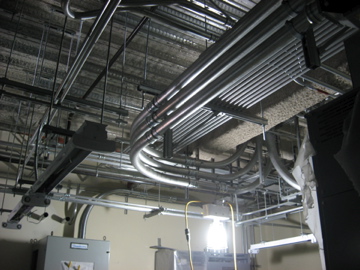


How I ever became a union electrician still baffles me. Having no handyman traits and never being one of those monkey wrench types, I randomly fell into the trade. I’d been back in Los Angeles for about six months after moving from New Orleans (feeling a sense of guilt after being away from my family for nearly ten years), thinking that maybe I ought to finally settle down. Once again, though, with my lack of any “real skills,” I was roaming from job to job.

I did a few months driving a FedEx truck around Hollywood, mostly for the movie studios and rich folks in the hills during the holiday season. When that dried up, I was back in the temp world, doing everything from night inventory of Toys“R”us to picking up women’s garments and putting them back on the hangers at Nordstrom. Without a uniform, all the women shoppers looked at me as if I were some kind of pervert as I put the panties and bras on the racks. I was never more thrilled at doing a menial job than when they moved me back to the shoe warehouse to sort through boxes.

I then did a couple of weeks in the film business, working as a location scout for a Febreze commercial. My mission was to find an older two-story house with a large attic. With a small camera and no credentials, rich people in Pasadena let me into their homes. They sat me on their couches and showed me all their prized processions and told me the history of their homes, all in the hopes that their place might be seen on television. I thought about how easy a gig this was and that, if I ever became hard up and decided to enter a life of crime, I knew how to go about it. But the company never used any of my contacts. Two weeks later, I got a little check from a sketchy Italian in a non-descript office off of Ventura Blvd. Once again, I was out of work.

Resumes were sent out, applications filled. A month later, I got a job at, of all places, a porn company in Studio City. My job was handling the mail and keeping inventory of movies with cinematic gonzo titles such as Chubby Chasers, She-Male Strokers, and Horny Hairy Girls. By the second month there, I was doing quality control, editing movies before they went out for final pressing. It was a strange job, given that staring at dicks and pussies and hearing moaning and grunting coming from various computer monitors all day wasn’t typical, everyday fare, but as much as I could, I got used to it. One time, the UPS guy came into the mailroom just as I was finishing the final touches to Cum Swallowers 18.

“Man, isn’t it weird, watching this shit with women right in the other room? Do you ever get a … you know, while you’re sitting there?”

“I wear baggy pants.”

A couple of months prior to this, my friend and I, on a whim, had taken a test for the International Brotherhood of Electrical Workers. My girlfriend at the time’s old roommate was a union electrician and he mentioned they were hiring, that the pay was good, and that we should try it out. I didn’t really know what would come out of it, but I took a test involving mathematics and mechanical theory. Somehow, I was one of the twenty-five percent who passed, and a month later I was being interviewed by some important, life-long electricians. Sitting at the end of a long table, they peered at me with judgmental eyes, jotting down random notes about whether or not I had the willingness and commitment to put in five years of schooling and training to be a certified journeyman. I put on the mask and told them I had all it took. I would make the union proud. Sure, I had no experience. A drill motor? Of course I know how to use a drill motor. A Sawzall? Come on, what do I look like? Electrical theory? Uh, the hot, the ground, well, hey, let me work on that, but don’t you worry, you’ll see, you won’t regret it, look at these hands, strong hands, warehouse hands, I’m telling you. I’m ready to stick put. Those roaming days are over: family, kids, stability, all on the horizon, sir, I mean, brother, I mean, brothers. So, where do I sign?

It wasn’t much long after that that I got the phone call from the union to report to a job the next day. With that, I bid farewell to the adult entertainment industry and was now an apprentice at a new elementary school being built in Echo Park. I knew nothing about electricity, aside from the fact that if you touched a wire when it was on, it probably wouldn’t feel too good and that, sometimes, you die.

I won’t attempt to go deeply into the inner workings of unions, and, truthfully, I can only write about what I was exposed to, but I suppose a little background is needed. Within the union is a whole hierarchy that closely resembles the military. There is an order to things, a structure, power in numbers, and, at the bottom of those numbers, lies the apprentice. You start off doing labor, and, gradually over time as an apprentice, you’re shown the tricks of the trade. If you make it through five years, pay your dues, and haven’t managed to electrocute yourself or fall off a high rise or gone half mad, you get your ticket. Above the apprentice are the journeymen, then foremen, then general foremen; all, for the most part, well-skilled and educated electricians who have gone through the same schooling and rite of passage, so to speak.

I tried to go all in, learning as much as I could. I worked during the week and went to school at night, studying for hours on end.. I plastered my truck with union stickers on the bumpers and the windows. I told myself the union was the best thing that had happened to me. Here I was, finally at a place where workers had some sort of power; you got your breaks, you were paid for overtime, got raises twice a year. This was the good life for honest, hard work. After countless jobs that were going nowhere, I would have a skilled trade. My punk rock buddy, already months into the program, regretted giving up his computer desk job for the grinds of construction, and said it was all shit: “Just get through the school, get the card, and get the fuck out.”

I can honestly say, despite the kind words of most of my fellow workers as I progressed through the apprenticeship, I never was much of an electrician. Sure, I always showed up and worked hard, but it really wasn’t out of any sense of pride. It just made the day go by faster. What else was I going to do and where else was I going to make twenty bucks an hour? What other job was going to give me full health benefits and pension and annuity and all of those wonderful things in the world we supposedly strive for?

Now, I’m not saying I didn’t have any pride in my job, because that just wasn’t the case. No matter your skill level, you can’t help but feel a sense of appreciation when you’re a part of something being built. You start out with an empty plot of land, only the iron columns standing, maybe some metal decking. Then pulling string lines where walls will one day be and, over the months watching it all—the concrete being poured, the studs being raised, pipes ran, wires pulled, transformers mounted, lights hung, deadlines, failed inspections, pipefitters, iron workers, carpenters, laborers, plumbers, crane operators, rod-busters, tin-knockers, painters, grunting and screaming at other trades. Under the glaring eyes of raving and ranting foremen and general contractors, what were ten guys on a site grows to be two hundred. There’s bad weather and no material and faulty blueprints—but after doing this at a couple of jobsites, you know, in the end, that no matter what, it will all eventually come together. Months later, where there was just dirt there will be a school or a library or a warehouse, maybe a waste treatment plant or a bank. People will be in there doing their work with no thought or care of how it came about, but you will look at that building every now and then when you’re on that side of town, thinking you had a small hand in making it come to life. Honestly, you’ll feel quite good about it.

All said, you get moments in your life when you know—not necessarily those bad feeling days that come around here and there—but where you come to the full realization that at that particular place in time that this is not what you want to be doing. I had had these questions leading up to this, but was struggling with the whole idea of what else I would do. I was thirty and, despite the way I’d tried to live my life, I couldn’t help but feel the pressures of having a good job. It’s just what you did.

My memory takes me back to one brutal summer day working in Van Nuys. It was a hundred and eight degrees. I did the morning shift up on the roof, making a hundred holes in the metal decking with a plasma gun. Frantically racing around with a large compressor and hose, I was trying to beat the noon-time sun. Later that afternoon, I was hunkered down in a six-foot deep ditch of dirt, running twelve four-inch PVC pipes that would months later carry the 4160 volt feeders into the main electrical room. A crane lifted iron bars directly overhead as ironworkers walked the columns like monkeys, bolting and welding the structure into place. Even later, I was helping lower and rig a transformer that weighed five tons down into a basement and found myself nearly pinned against a wall. By the end of the shift, I was yelling like a madman at a carpenter who had stolen my extension chord I needed to charge a scissor lift with. Placing my tool bag and hardhat in the gang box, I took a good long look around me and shook my head. How had I gone from touring in punk bands and thinking I’d be a writer and world traveler to this? It was just a typical day-to-day, part of the chaotic orchestra, the grinds. It was something I truly respected from my co-workers, but when I got home later, exhausted, slumped on my couch, my girlfriend at my side but too tired to say or do anything, staring at the TV like a zombie, I couldn’t help but wonder exactly where my life was heading. Me and my friend Andre, six years my senior, who hadn’t bought into a lot of the union life as much as I had, would often jokingly bitch to one another about our lot. What the hell had we signed up for? We’d get drunk and make up stupid punk songs about “The Union!”


Still, I did my best to stick with it. I only had two years left until I got my ticket. Things with my girl at the time went south though. They had been for quite some time and were spiraling down into nights of screaming matches and too much alcohol and tears. We’d briefly make up under the sheets only to start all over again a few days later. I wondered, how did you get back what you had in the beginning, when it was all new, when it was all laughter and love and dancing to the Pogues until the early morning hours? The truth was, it just wasn’t there anymore and it wasn’t going to be. I guess you could say the thrill was gone, so I moved out of the house.


Wednesday, December 22, 2010

City of Refuge (Part 5)


My introductory to construction work came about in New Orleans.  The neighbor at my first place I stayed in did jobs around town and hired me as a helper.  I’d done quite a bit of manual labor over the years, but nothing with much skill involved.  My boss Pete was a good carpenter and plumber, often drunk and in a bad mood, but he taught me a few things, like hanging sheetrock, painting, fixing bricks, how to carry a 500 lb clawfoot tub up the smallest set of stairs imaginable.  It was all under the table and paid decent, and I didn’t really know what I was doing, but I worked hard and I showed up on time, two traits that seemed to be lacking in much of the workforce that was down there.  I did some temp jobs here and there, and then I worked with Eddie about three months. 

Eddie painted a lot of houses and did carpentry around the Bywater neighborhood.  He needed help on a home over on Poland; sanding, trim work, so I did that for about a week.   We then got some work over at this house, a fixer-upper that was bought by the son of Wille Morris, a famous novelist who at one time had been the head editor of Harpers Magazine.  Originally the job was to just paint a few rooms.  It turned out the many of the studs and beams behind the old barge wood walls and burlap were rotted.  The foundation that held up the house was also eaten away by termites.  The bathroom was a mess.  Windows had to be replaced.  The electrical wiring redone. 

We spent a good couple of months there, building temporary walls, painting all of the rooms, redoing the bathrooms, hauling crap out to the backyard.  It was a good gig since it was only two blocks away.  We’d walk to work with a bucket of tools, go home for break, maybe have a beer and a sandwich, take a nap, and then we’d head back and finish the day.    It was so much different than the large-scale, sometimes quite stressful, union construction life I’d later be exposed to, but as I look back on it, they were good, simple times.  Eventually, the job was finished, work dried up, and I got a job washing dishes in the French Quarter.

Me:  I can’t help but laugh when I think of us riding around with a bucket of tools in it.

Eddie:  Well, I couldn’t drive.  Actually, I saw everybody else around with bikes so I went over to French Quarter Bikes and got a basket.  I bought everything smaller, got a smaller nail-gun,  and when I needed something bigger I’d hire Harold’s brother in law that had a truck.  It was actually cool.  After you left I got my license back and I was driving all the time and I was like, fuck, it was cool to drive around, but I felt a lot healthier riding my bike around and in the neighborhood.   Folks identified you with it.  I liked riding to work and people would say (In 9th ward accent)  “Hey Painter!”

Me:  Hey Painter!

Eddie:  “Hey Painter!  Wud up man?  Where y’at?”  I loved that.  I was part of the neighborhood.  I wasn’t some rich guy with a truck.  It made me more connected.

Me:  You remember that guy sanding in the bathroom of the house we worked on?


Eddie:  Oh jeez. 

Me:  I swear he was in that bathroom sanding for over a month.  Must have been on some good shit.(Laughter) 

Eddie:  There’s so many people you didn’t even meet.  Right around the corner was this cop.  He used to try to get me to do cocaine with him.  He’d come over sometimes before he got married.  His deal was he used to drive down to Mexico and have half of a gas tank un-welded and put half gas in it and then use the other half to put pot in.  Then he'd drive back to New Orleans and then unweld it and sell all the pot to the neighborhood people.  He couldn’t have really had that much.  It was something he did for bragging rights.  It wasn’t like he was doing pounds. I don’t know.  I don’t know what he was doing.  It  seemed like a waste.  He just liked to have something to tell people, be part of the community.

Me:  You have to some kind of fixture.  I was just kind of there.

Eddie:  You actually came at the right time.  It was safe enough, but still had all the elements of insanity.  All the cool people were there.  You had Indians, Blacks, whites, Puerto Ricans...

Me:  There was that fat plumber always over at BJ’s with his son.

Eddie: They had a towing company, were plumbers by trade and made all their money selling cocaine.

Me:  Father and son.  They’d try to sleep with the same chicks.

Eddie:  Along with their brother. 

Me:  Those guys were scary.  Not the son, but the two older ones.

Eddie:  The fat one would knock on my door, really late, I’d have the light still on.   I’d open the door and he’d say (in nasaly Louisiana accent)  “Hey Painter, let me use your mirror.”  He’d sit in the front room with the mirror laid out with this huge rock of coke for about twenty minutes and chop it all up and put in bags.  He’d say, “You want any?”  And I’d say, no man.  “Well, here’s forty bucks.”  He’d do that and then go back over to the bar.  They were all jacked.

Me:  I forgot about it, but now that I think about it, if I was to walk into BJ’s, I would think jesus, everyone’s on so many damn drugs.

Eddie:  Oh yeah, the booze was just to mellow them out.

Me:  Here I’ll meet people, maybe they’ll go do coke in the bathroom, but down there it was something else.

Eddie:  That girl I used to date that bartender there, she’d be all coked up.

Me:  And the girl that looked like Olive Oil.

Eddie:  Yeah, they’d be all wacked out, but you know, it was fun to be around them.


Four years after Katrina I finally made it back to New Orleans.  My cousin, who had spent years living in Nepal, helping to build schools and hospitals, was getting married to a New Orleans native.  They had a beautiful Tibetan style wedding in Mid City next to the old dueling area.  It was led by a monk chanting, and friends and family from all over were in attendance.  And of course, who was playing the reception, but no other than Kermit Ruffins.  There’d had been questions of whether or not he’d show up.  His dad had died the night before, but true musician he is, Kermit proceeded to play three gigs the following day.  Kermit blasted his horn in Louis Armstrong fashion, with that same friendly grin I remembered.  Little kids and old folks danced around.  Gumbo, seafood, jambalaya, ribs, and endless amounts of beer were had.  I couldn't have imagined a better wedding.

I spent most of my time with my parents and relatives, showing them around the French Quarter.  I tried to play tour guide and give them what little history I could remember.  I went into the cafĂ© I used to work at and surprisingly, some of the same people were still there.   I walked into the kitchen and found Paul, my old manager, huddled over the grill frying some eggs.  "You know how it is down here.  Shit don't really change that much.  My boy's 5 now though."

On Sunday before my afternoon flight I woke up around seven.  I got a cab and had the driver take me along St. Claude, past the seafood shacks and the run down hardware stores, the old Baptist churches, and abandoned homes, the Saturn Bar, the dilapidated schools.  He dropped me off at Poland next to the canal.  It was still early.  The neighborhood was most likely just settling into their drunken dreams.  I was hoping that maybe I’d come across a familiar face, but I hadn't really kept in touch with anyone I knew there.  I heard so many stories of people leaving, new people coming down, and now I was regretting that that life was so far away from the world I now knew.  

I walked by my old place and was pleased to find “Stay off, fuckin’ hipsters,” on the front steps.  There was now a trailer home in the driveway of the Christian ladies home and Horatio’s house was boarded up.


I walked over to Burgundy and Lessups and stood in the weeds in front of Vi’s placefront of the shotguns across from BJ's.  Vi was a beautiful spirited traveling artist, who I’d always wished I’d kept in touch with.  I always remembered the time she took me out to Lafayette for a Cajun party in the middle of the swamps that run alongside the Atchfalyan River.   In the middle of nowhere with friendly French folks, polka music, amazing food, drinking endlessly and dancing with the trees.  Years later, I’d find out that she lived in Brooklyn, had been a writer for Harpers, and then tragically, died in a car crash on a visit down South.  I remember that day, just staring at the computer in shock.  It didn’t seem right.  And yet, when I came across the pictures of her funeral - an army of rag-tag 9th ward locals, young and old, dressed as if they were in some 30’s carnival parading down the street, then torching a boat and sending it out to the Mississippi, I thought, only in New Orleans.

I then got to thinking about the younger girl from Minnesota that lived in the shotgun next to Vi's.    We used to spend a lot of nights listening to Dolly Parton and Patsy Cline on an old portable record player and drinking lots of wine and boos.  She dressed rather dirty and professed to be a lesbian, but with me she made an exception.  She hung with the younger punks and gays and squatters and sometimes I’d follow her around in search of other worlds I knew nothing about.  We’d ride our bikes in zigzags through the streets of the 9th ward late at night, and once a week we’d end up on the second floor of some club on Bourbon St. where you got popcorn and 3 movies for 5 bucks.  We’d find ourselves drunk, making out on the sidestreets, and then back on Burgundy.  Often times we'd lay in  her broken down car out front, putting in on a tape of Otis Redding, blaring it loud, climbing on top of the roof, staring at the stars.  We'd have the windows rolled down, listening to the regulars over at BJ’s, sometimes fumbling around in our nakedness, sometimes arguing, but then turning up “Try a Little Tenderness,” and all was right with the night.

People come.  People go.  In.  Out.  Back again.  I walked down Burgundy and Royal St.  I saw the remnants of Katrina still close at hand in a number of homes.  The spray-painted circles with symbols for gas leaks and the number of people dead were still marked on front of homes.  Some had even been repainted and kept these.  I guess it was a reminder.   I tried to picture what it must have been like to go through the flood and I really couldn't.  I had an uncle that had been in the center of it all, working in Charity Hospital at the time, and I could remember when I first saw him months after, and him explaining what had happened.  The intense look on his face as he described the people he'd seen dying, the water rising,  the snipers guarding him on a parking garage roof, the insanity of it all.  Part of me was thankful that I hadn't had to go through it all.  I wondered what I would have done, what would have happened.  I thought about how different my bond and ties to that city would be. 
 
The neighborhood looked bad, the streets cock-eyed, the lots abandoned, but parts of the Bywater had looked like this when I had lived there so I wasn’t sure just how much had changed.  There was something that resembled gothic folk art placed on the side of Fradies, a staple neighborhood convience store on Dauphine and Piety.  It had a scary looking man with a black eye.  Around him were the words, “Beware, there’s a mugger in the hood.”  It then listed the addresses of separate incidents.  I wasn’t sure what to make of it.  Maybe it was folk art, but I had a feeling this was the locals version of neighborhood watch. 

I reached the train tracks along Press St., and then passed Elysian Fields, through the Marigny and into the French Quarter.  Everywhere I seemed to go held some sort of memory, all distant and jumbled, but beautiful at the same time.  I wanted to cry, but it wasn’t crying for longing or sadness, nor really for happiness either; just that crying you get when you’re filled with emotions that don’t have definitions, crying because it’s the only outlet that makes sense.  Crying because it’s probably the most human of all emotions.  I thought about the times I had, good and bad, in such a short amount of time there.  It was strange to think that later that night I'd be sitting in my quiet home in Portland, in my relatively mundane life.  I stood out in the hot morning sun, trying to understand the strange realities of time, and the stark contrast with that life and the one I had before.

I can see what Eddie means.  It’s a hard thing when memories get disturbed.  We find ourselves standing in a place that is no more.  That time is gone and the fact that we can’t get it back is a hard thing to deal with.  But at the same time, I suppose it’s a good thing.  It reminds us of who we are, the places we’ve been, and the beautiful people we’ve been fortunate to come across in our lives.  Sometimes, if we're lucky, maybe it tells us where we’re going.  Hell, maybe we're not supposed to try to figure out.  Maybe it's as simple as the words to that old Neville Brother's song, "Let's Live."  Y'heard me?


Thursday, December 9, 2010

The City of Refuge (Part 4)


For a couple of weeks I got a job at a daily labor place in the Skid Row area just off St. Charles by Lee Circle.   On the way there I’d walk by where The Hummingbird, a divey hotel that used to have a diner on the bottom floor, had been.  It was now all boarded up.  I’d always get a little sad looking at that place.  It brought up old memories from years before. 

I could remember the old, haggard woman at the front desk, the dilapidated T.V. that only got one station, always something with Charles Bronson in it.  The smell of pure greese and grill wafting up the stairs, the hotel looking more like a prison with imposing doors, and only one bathroom at the end of the hall with a busted lock.   

Half of the residents were just out of OPP.  Nearly everyone was constantly drunk and on drugs.  And somehow I had this beautiful girl by my side by way of Baltimore.  We were spending all of our money going from bar to bar in the French Quarter, one never-ending drunk only to pass out on the stained sheets under the strange glow in the dark constellation that was painted on the ceiling by a previous resident.  Then I’d think back to how times can change so quickly.  Life alters in strange ways.  I’d remember the fire in the rooming house in the Treme the week after we left the Hummingbird, the old man dying as we screamed for him to jump off the balcony.  The firetrucks and the news stations.  I’d remember us boarding that Greyhound with a couple of black trash bags filled with burnt clothes and I’d just see us looking out at the window, maybe West Lousiana, or East Texas, staring out, not saying anything.

I’d stand out there on St. Charles, still in the darkness of morning, now years later, thinking about that other time, about that other life, and I’d wonder about that girl.  I’d heard she’d gotten married.  That’s all I knew.  But I wondered if she ever thought of me.  I’d wonder if she thought about that time with regret.  Maybe it didn’t even pass through her mind.  And then I thought about  where my life was.  How, despite years traveling, and countless jobs, I hadn’t really changed much.  I was still hard on my luck, scrounging for work, just barely making it.  Seemed as though I hadn't learned a thing.  Damn, The Hummingbird, just the site of it really got me in a bad place, brought up all kinds of old emotions.  I’d then walk into the labor place and sign my name on the sheet for the day.


Dressed in our blue jumpsuits (we looked like jailbirds and out of the eight, I was the only one that hadn’t done time) we’d catch a van at 5 a.m. that would take us out to swampy area across the Mississippi where we worked at an oil-rigging yard.  We’d get out to the yard and they had me and this young kid named Lamar from The Treme working with me in the recycling area.  We’d take old computers and other metals and recycle them according to whether or not they were copper, iron, that sort of thing.


All day long we’d stand at the table, an awning keeping us from melting away, listening to dirty south hip-hop that’s lyrics that seemed to center around death and guns and bitches.  Lamar tried to act tough and didn’t say much.  His mumbling was hard to understand, and when he did talk, he’d say something like, “Yeah, going to try to fuck me a white bitch.  Oh yeah.”  I’d fight with him over the radio stations, “Look, at least some Marvin Gaye, Stevie Wonder, what the hell is this other crap?”

One day Lamar showed me all the gunshot wounds he’d received.  He displayed them for me as if they were a badge of honor.  Street cred.  Three in his leg, one in his arm, another in his side.  He couldn’t have been more than eighteen.  He’d seen a side of life I never would and he talked tough, acted tough, not because he was, but because it was what he knew. 

Well, one morning he showed up for the van and he was crying, all out balling like a little child.  He went limp in another one of the guy’s arms and the man held him for a good minute, tears dropping onto the sidewalk.  We all looked over, but didn’t say anything and he turned his eyes away, ashamed.  We knew someone close to him had died.  Mom, brother, friend, we weren’t sure.  I worked another week out at that place and never saw Lamar again. 


Eddie:  I lived there a really long time.  I was scared at first.  I lived in New York in the early 80’s, in the East Village when it was really rough, but New Orleans made New York look like nothing.

Me:  I think New York pales.  As far as the violent factor and the proximity of it all.

Eddie:  The year I first moved to New Orleans there was 352 killings.  It was crazy.  It was surreal.  I’d go out to work and come out and there’d be another two people murdered.

Me:  Were you the one that said people used to put their guns on their bar?

Eddie:  Oh yeah, BJ’s was like that.  When I worked at CafĂ© Giovanni.  We’d have the night when the two black football teams would play.  The Bayou Classic.  Everyone would close early.  All the restaurants.  Because what would happen everyone would run through New Orleans robbing people, rape, killings.  That day we’d have to check our guns in.  Make sure no one would start firing them off.

Me:  The Wild West.

Eddie:  Yeah, we had to do that every year.

Me:  Otherwise, everyone’s carrying guns around?

Eddie:  Yeah, we all carried guns for a long time.  I never did like it.  I had a license for mine.  I fired out at a range where the cops used to go.  I never told anyone though.  It was around the fourth year when I got shot at and I pretty much said, “You know, I don’t like when I can’t shoot back.” I didn’t want to hit anybody, but at least I could shoot at a garbage can and watch him run off.  It was pretty tripped out.  I never told anybody.  I never brandished it, but I always had one on me.

Me:  I figured everyone in our neighborhood had a gun so I didn’t need one.

Eddie:  Oh yeah. I just never told you.

Me:  Oh, I knew you had guns.

Eddie: Yeah, when I rode my bike around.  It’s just one of those rules.  You can’t brandish your weapon.  It’s against the law.  Of course, once I got a gun no one shot at me.  It was the weirdest thing.  I should write a book about it.  How petrified I was before I didn’t have one and then I got one and never had to use it.  It was weird.  I can’t even explain it.  I didn’t even need it.  I don’t know if I changed or what.

Me:  Maybe you had a sense about you that you didn’t have before.

Eddie:  Yeah, you don’t really know, because everyone else has them.  Maybe they can tell about your demeanor subconsciously because they grow up that way.  I worked with guys and had to tell them, hey, you got to put that on the ground, you can’t drop that when you’re working on a ladder, it was weird, I didn’t like guns.  But you don’t want to be there with no way to defend yourself.


Me:  What happened with my place after I moved in.  Didn’t the guy after me kill somebody?

Eddie:  The gentlemen that moved in after you left was this high yellow black guy.  Had a really nice job, fancy car.  He was gay.  His family was the rich, lawyer kind of prestigious family.  He liked white boys.  He’d get these crazy white boys over.  Heavy-duty in the drugs.  I’d hear them fighting through the walls.  One time I think he killed somebody.  Some other guys came and carried a body out.  That’s why I moved over to France St.  Things were getting crazy.  I heard after the hurricane the cops got him for killing somebody.  I don’t think it was his first time.

Me:  So a multiple murderer was living on my side of the shotgun?

Eddie:  A neighbor came up to me because I wasn’t there after a while and they said something was going on.  They’d seen some guys carry a big rug out late one night.  He had ties to some highfalutin people.  I left because I didn’t want to get involved.    Harold was like, “Oh no, you’re supposed to watch the house, you’re my partner.”  I told him I didn’t want to shoot nobody.  I was like, thanks Harold, you kind of saved my life, but I’m not going to die.   

Wednesday, December 8, 2010

City of Refuge (Part 3)


“Hey, my friend, how ‘bout a dolla’ for da’ cold beah?”

This was Horatio’s daily greeting  for me as he would hobble by my house and over to BJ’s across the street.  The man was always drunk and had senile tendencies.  His legs were all busted up, his clothes ragged, and he smelled something god-awful.  Burn marks covered his arms and neck and legs.  It was hard to ever make out much sense of what he was saying.  Usually I’d keep quiet around him just because once he got started talking he wouldn’t stop.  A lot of folks in the neighborhood didn’t like him.  I felt bad for Horatio so sometimes I’d let him sit on the stoop with me.  Eddie would always give him a couple of bucks.

“That’s a good man dare, a good man.  He always treat me a good.  You know what I’m saying?

“This neighborhood used to be rough.  Oh yeah, I remember it was all de Spanish.  Yes, we use to have da cookouts and drink da’ cold beah.  Dangerous heah.  I remember the bar got robbed, day shot someone right on dat corner.  Stealing cars.  I saw tree of da felas take the wheels off a car.  Yeah, it was a good neighborhood.  I take care of da neighborhood.  Everyone call me Amigo.  I take my gun and point it at that that guy over dare.  I almost shoot him too, but I say, no way, I’m too old to go to jail.  Ellis Island.  Eighteen months.  After dat, I never go back.  You a good man.  You quiet.  You don’t say much but you a good man.  Thank you for da cold beah.  Say, my friend, I need to get da bus.  I go over to Canal and hang with my friends.  I don’t know, my leg all busted.  My friends, dey good people.  Always give me a couple dollas’.  They say, ‘Amigo, where you been?’

I gave Horatio a dollar and watched him walk straight over to the bar.


Me:  What was Horatio’s deal, besides being totally insane?  Hadn’t he at one time been a merchant marine?

Eddie:  Yeah, he was a merchant marine.  He was a steward in the union.  I guess what happened to him was he kind of went crazy.  That’s why you’d see him walking out in is sleeping drawers.  At one point he’d been all around the world.  He’d show you swords he’d gotten from Portugal.  I think he was addicted to drugs.  Or maybe he had some kind of major breakdown.  I talked to his sons a few times and they were all scumbags.  Word was he used to party a lot, smuggle drugs, anything to make some money.

Me:  Was he black, Cajun, Indian?

Eddie:  He was Indian.

Me:  One time I woke up and saw him leaning over the porch peeing on that lady’s house next to us.

Eddie:  Yeah, the Christian.  I’d seen him walk down the street with his ass out.  Dirty ass.

Me:  He smelled like shit.

Eddie:  The guy was gonzo.  I don’t know, they probably took his house away from him.  He’d always come up to me and ask me how much a repair would be and then he’d hire these people that would rip him off. Gutters, anything, “So how much ‘dat be Eddie?”  I’d say “Well, you’re looking at probably 3400.  Maybe four grand.”  “Four Grand!”  

Me:  Yeah, but “How ‘bout a dolla’ for da’ cold beah?”

Eddie:  Oh man, you couldn’t get by him without giving him something.  The weird thing was he’d tell me interesting stories.  I liked him, but he started smelling bad after you left.

Me:  Oh, he smelled bad when I was there.

Eddie:  He never washed himself anymore, kind of sad.

Me:  Who was the Vietnam Vet across the street?

Eddie:  That’s a freaky one.

Me:  Weren’t he and Horatio once pointing guns at each other?

Eddie:  Yeah, the little short guy.  He lived with that girl.  They were on a lot of drugs, coke and pills. He was getting money from the government.  His leg was fucked up.  Think he had Agent Orange. He was in Vietnam and I think he was into some heavy shit.  Special Ops.  He was just too crazy.  There was something about him.

Me:  His hair was like Thomas Jefferson and he was all frail and walked with that cane.

Eddie:  That was a wig.  He didn’t have any hair.  That weird hairdo thing he had, that was a wig. I’ve seen him without it on.   I always thought that was his hair.

Me:  The next to him there was the guy next to him, Red?

Eddie:  Yeah.  (laughter) 

Me:  He was a drug dealer and he also drove the horse carriages down in the Quarter, right?

Eddie:  Yeah, well Red, I actually liked him.  Always jacked, always yelling at the top of his lungs, but with a weird sense of humor.   You know what I mean, a lot of the time he was tweaked out of his brains.  He was never quiet.  I’d see him at the bar and he’d gamble a lot and he’d buy me beers.  He couldn’t talk normal.  Always loud.

Me:  And then there was that quiet older Mexican guy that lived with them, I guess his lover.

Eddie:  Yeah, man, that’s the thing about New Orleans, it was so far from normal.

Me:  Let’s see, I also have Okra Man.  I don’t know if I remember him.  Just vaguely.

Eddie:  Oh, there’s a movie about him.  It’s about him getting up every morning and buying his stuff, all the vegetables and what he did to it, and walking around with a smile because people liked him.  He was sort of a fixture.  That’s the thing about New Orleans.  They back stuff up.  Especially if it’s entrepreneury, crazy, things that give color.  They promote it.  It’s kind of weird.  Anywhere else no one would talk to a guy like that, he’d be shut down, but down there they like it.  (goes into voice of Okra Man yelling through a blow-horn).  “I got  some Okra, I got some green beans.”  You do that here in San Francisco, the cops are all over you.

Me:  You’d be in the mental ward.

Eddie:  Yeah, in New Orleans they celebrate it.  I mean, shit, I’d have a hangover, passed out on the floor from drinking all night, and then I’d hear that fuckin’ screeching voice going by with that busted pa.  It was like being inside a dixie can.

Me:  Sounds like a Tom Waits song.

Eddie: It was.  (makes screatchy noice that sounds like poor radio static).  And then there was the religious guy with all the iron work on his car.  That guy would come by talking about the bible. 

Me:  I don’t remember him.

Eddie:  He came out sometimes.  He’d always talk about crack.  How the bible changed his life.


Me:  How would you say the neighborhood changed from when you first got to there to when you left?

Eddie:  Oh, it totally changed.  People were scared when I first moved there.  There was maybe six white folks.  The rest were all high yellows.  First five years I started seeing people coming down from New York checking stuff out.  Then about eight years into it the whole neighborhood was changed.  It was weird.  I wish I would’ve kept a journal because there were some wild things that went on back then.  I just can’t remember a lot of it.

Me: It was really rough back then?

Eddie:  Yeah, over at the store on Poland, the one we used to get beer from, there’d be shootings every day.  They’d sell crack and heroin.  Then you’d see those guys walking towards the pier to deal.  There was nothing over there except for the Naval Base.


Me:  By the canal.

Eddie: It was pretty desolate.  Most of the places were empty, full of squatters.  Then the city did this program where you could get a house for about 10,000.  You’d have to prove you were working, give the city 2 grand, and then after a while they’d re access the house, and you’d pay it off.  It was so bad.  If you don’t pay the city for water, garbage, then the police don’t show up.  Once the better people moved in and actually paid the bills, the police actually showed up.  It became more gentrified.  It wasn’t stable at first.  There was shootings.  There were bullet holes in your house. 

Me:  Didn’t it get weird after I left?

Eddie:  After you left that other guy moved in and that’s when I got out.  I still had my place, but I moved over to France St and moved in with that actor guy.  I don’t know, my mom got sick and I left for California a few months later.  Katrina hit and I’ve never been back.

Me:  What do you say, well, what’s your first thought when someone asks what it was like to live in New Orleans.  What do you think about?

Eddie:  Honestly, it’s like your own hidden secret because anyone in the real world wouldn’t be able to understand it.  New Orleans is not like America.  Maybe like Cuba or Haiti or something. The culture is African.  The ideology is African.  Then the French incorporated their ideals.  A different mentality.  A different personality. A different set of rules.  I don’t know, vibrations.  It’s bright.  It’s beautiful.  It’s dangerous.  It’s like looking at a crystal ball, shiny and it attracts you, but it’s like looking at a gutter at the same time.  It’s very free.  In the south it’s where you go.  In Hawaii we’ve got this thing called the City of Refuge.   If you didn’t fit in, if you were weird, if you couldn’t fit in with regular society, if you were an artist, you’d go to the City of Refuge where people were like you.  That’s kind of what New Orleans is like to me.   Beautiful culture.  A lot of freedom.  Almost too much.  A lot of self-gradulation.

Me:  Sometimes I thought of it as a fantasyland, in a weird way.

Eddie:  It is, like the Wizard of Oz.  It has nothing to do with America.  It’s in own entity.  You don’t even feel like you’re in the South.

Me:  I remember watching the news, right after Katrina hit.  They showed this clip and they were trying to get people to evacuate their homes because they were flooding.  They showed four or five people, somewhere in St. Bernard, and they were dancing Mardi Gras style and the people I was watching it with out in California were watching it thinking these people were insane.  I was watching it thinking, maybe they were a little crazy, but that at the same time that was how it was down there and I couldn’t find the words to explain it.


Eddie:  I mean I loved a lot of it.  I loved the food.  The music was cool.  At first I didn’t appreciate it, but I didn’t really know the depth of New Orleans.  If there wasn’t New Orleans  there wouldn’t be modern jazz.  If there wasn’t New Orleans there wouldn’t be a lot of the rock n’ roll we have.  I know it’s horrible how we abducted Africans and brought them to America, but without the African community we wouldn’t have punk rock.  You know it’s tripped out. 

Me:  Of any place I’ve ever been, I’ve never had a city where when you meet someone that’s from there, you don’t even have to be from there, but if you lived there and you know the places, it’s totally different than any other city.  If I meet someone from San Francisco and I say, Hey, I was in San Francisco, you know Haight and Fillmore, well it’s something totally different.

Eddie:  Well, if you look at cities and the humanity of them, New Orleans is the most human because it has people that save people in the middle of gun fights, it has people that sacrifice to help other people because they have to, life and death, human beings kind of work better that way.  Whereas here (San Francisco), it’s so mundane.  After you get some money, you get on the bus, a black guy walks on the bus and everyone stares at him.  Everyone’s got their Armani jeans or whatever they wear around here.  Staring into their new Iphones, acting like their big wigs,  talking about money, but, yeah, they got 10,000, 20,000, 200,000, but that’s no money.  More money than we got, but that’s not money.  Money’s like 6 million dollars.  You name yourself after a park, that’s money.  In New Orleans you could have nothing and still dance around and enjoy it.  You don’t have that here at all.  I was in Voodoo Lounge here, a New Orleans bar to watch the Saints in the Super Bowl, man, when I walked out of there I was so in spirit, I felt so good, people were jumping around, saying all that crazy shit, there was something really wicked magical, something magical in it.

Me:  I remember watching the game going crazy and the people I was with didn’t have any real connection to it and they didn’t seem all that into it.

Eddie:  Well, the Saints were the Aint’s for a very long time and I got pictures to prove it.  The bags.  I’d go to the games with my friends, but you wouldn’t’ even watch the games, you’d go to get drunk and push each other into the isles.  I mean how many times can you go and watch them miss a field goal at the last second?

Me:  I remember being in this bar in the Marigny.  It was called Smitty’s.  Had to get buzzed to get in.  I was watching a game there and they fumbled just as they were about to score a touchdown and lost at the last second and all five people in the place went nuts.

Eddie:  Yeah they filmed a Travolta movie in there.

Me:  They did?

Eddie: Then across was the Kitty Kat Lounge where everyone dressed in Kitty Kat outfitis.  That place sucked.  They didn’t have any beer so you had to go over to Smitty’s.  It was a white-power bar.

Me:  That’s not the same bar.

Eddie:  It’s not?

Me:  No, Smitty’s was down near Elysian Fields.  It was the small, old dive bar that had stairs inside that led to the apartments upstairs.  The owner was an old guy that had one of those voice-automators that he’d put on his neck when he talked.   He had emphysema.  It was real small.  One of the bartenders was a writer.  I forgot who I met her through.

Eddie: Oh, I remember.  I introduced you to her.  She knew all the vagabond types.  She was actually published in a major book.

Me:  The first time I went there I sit down at the bar and some guy next to me says, (in E.T. voice) “Hello,” and then I find out he’s the owner. 

Eddie:  That bar creeped me out.  I never wanted to go in there.

Me:  Then this other guy next to him had just broken his neck, fell off a roof, and he had the metal halo on his head.  He was drinking, popping pills and freaking out about the Saints game. 

Eddie:  That bar was weird, something that director from Baltimore would be into.

Me:  It was a John Waters type place.

Eddie:  And then we’d go to that soul food restaurant next to the bar.  There’s nothing going at the bar and there’s a random soul food place in the back. We’d get breakfast there.  I mean, I loved New Orleans.  Sometimes you don’t want to, I don’t know, I get sad...I loved it there so much.  I guess I don’t want to see the memory disturbed for me.  I want to take it to the grave.  My experiences there, you know, I’ve seen bad, I've seen people in jail, ladies shot, I got shot at, all kinds of things, but as many times as I said, Eddie, all right, I’m going to get the fuck out of here, something really wonderful would happen that kept me there.

Me:  I suppose it's the extreme of both worlds.  For me, I don't know that I could handle it for too long, but I could appreciate it for what it was.

Tuesday, December 7, 2010

The City of Refuge (Part 2)

 
I’d been in New Orleans for about two months, subletting a house over in mid-city.  It was a nice neighborhood by most standards, but it kind of lacked the grit I was looking for at that time.  One night I ventured back into the 9th ward and found myself over at Vaughan's, a small juke-joint type bar on Dauphine St and Lessups.  The 9th ward had a reputation for violence, yet seemed to be where much of the city’s art and music was coming from.  With the sounds of Kermit Ruffins and the BBQ Swingers and the wild carnivelesqe mix of bar patrons I instantly fell in love.  One of the best jazz trumpet players, Irvin Mayfield, showed up and battled Kermit.   There was hootin' and hollering and jazz rhythms bouncing off the walls.  Drugs and booze, red beans and rice, beautiful women and much laughter and dance.  I was mesmerized by it all and wanted to somehow be close to it. 

For the next week I drove all around the streets of the upper and lower Bywater looking for a place I could afford.  Then one day I was sitting in a dark, gothic-type bar next to Vaughan's and saw a flyer that was advertising a shotgun 1BD for $400 two blocks away.  I called the number on it and by that late afternoon I was drinking bottle after bottle of wine with Harold and Holly, my new landlords, at their home off of Louisa St.  Though they were in their mid-fifties they seemed to have the energy of a high-school couple.  Harold was wild and electric, dressed in his surfer shirt and Bermuda shorts, cloud-white hair and beard and little lightning eyes.  Holly seemed to be just as animated, a little more refined and intellectual, but fun to talk to. 

Harold and I found ourselves later that night at BJ’s, the dive bar across the street from my new place.  It reminded one of an old living room rather than a bar.  It seemed like the type of place where everyone knew everyone and if they didn’t know you they were going to make sure they did real soon.  Harold was bouncing all around the bar, throwing quarters in the jukebox, pulling women off their stools to dance.  He would kneel down on the floor with an invisible microphone, doing some bastardized Elvis impersonation, as the sounds of Fats or Ernie-K or the Neville Brothers played on the speakers. 


He brought me over to the Triangle later that night, a small warehouse by the railroad tracks a few blocks back.  Inside were broken-down VW bugs and computers and records and paintings and stacks and stacks of old suitcases.   There were all kinds of different cameras, a huge barber’s chair, and a make-shift kitchen and a mattress.  Out of those suitcases he pulled large black and white photos he’d taken years earlier, all of them mostly documenting the punk/new wave/art scene in San Diego in the late 70’s and early 80’s. 

To this day, I consider them to be some of the greatest photographs I’ve come across.  Why they’re not sitting in some museum or never made it to the pages of LIFE magazine is beyond my understanding.   His portraits of girls with Mohawks, men being ripped down to the ground by policemen, Asian cooks in front of old diners, seemed to beautifully portray a different time and place that is no more.  

He also once gave me a memoir type piece he wrote about the origins of punk rock in San Diego during the late 70’s.  At the time he was a struggling jeweler living in a house with hippies and then punk/new wave bands started to pop up: The Penetrators, The Dils, The Zeroes.  He writes about their first shows put on in VFW halls and small clubs.  Tragically, much of the scene came to a crash just as fast as it started.  Violent crowds took over shows, cops were shutting down clubs, and before he knew it, much of that era was gone.  What he wrote isn’t necessarily the best in form, but the feeling of longing and missing of what once was a time of rawness and freedom of music and art, comes across in a rather beautiful way. 


Me:  How did you meet Harold?

Eddie:  Actually, that’s a weird story.  I kind of met him years and years ago when I was a punk rocker living in California.  He used to have a magazine in San Diego.  He had a little space where bands would play.  He doesn’t really remember it, but I remember him.  He was kind of eccentric and weird and I was more of kind of a straight punker.  I wasn’t into that side of the scene. You know that wave, arty stuff.  He was a genius to talk to though.  We'd talk about art. He was incredible.  He used to build his own 360 cameras.  Just a genius.  His story is his dad died.  His dad owned a lot of land.  San Diego a long time ago was mostly military and really small cottages and there wasn’t much of anything but there was a lot of farmland that took care of all the navy personnel.   His dad owned one of those and he died and he gave Harold and his sister a few million dollars. That’s how he was able to buy all those houses. When I first knew him he made jewelry.

Me:  Didn’t he have a store in the French Quarter?

Eddie:  Yeah, he had a store in the French Quarter when I first moved there.  And Holly was a semi-famous sign painter in San Diego.  She did a lot of signs.  She was the first person I ever saw do wallpaper, but in a way that was like painted art.  She’d do all that high brow, multimedia shit.  She made a lot of money doing that.

Me:  I actually have a memoir type piece Harold gave to me all about punk rock starting in San Diego in ’77.

Eddie:  Yeah, he was a punk rocker in that area.

Me:  He talks about the Zeroes and The Penetrators.


Eddie: He was a punker and a surfer.  What happened was I was living up on Magazine and Tchopotoulis, by Tippitinas, over by Grandma’s Place and My Mother’s place.   I’d hang out at this place called The Nest .  There was a bunch of punk rockers, artists, and musicians that hung out there.  I’d broken up with my girlfriend and one of the guys that lived there was a painter and knew I also did some painting.  He told me there was this guy across town that had a house that I might want to know about.  So I met up with Harold and it turned out we’d known each other 15 years before, but we weren’t great friends. I worked on the house and he let me stay there.  He kind of knew me from the past, but honestly, I was kind of scared of him.  He was sort of like a father figure though.  I was in a bad place at the time, and in a financial way, he kind of picked me up, you know what I mean, kind of my savior, actually.

Me:  What was with the little warehouse he had over by the railroad tracks?  

Eddie:    Him and Holly had been married since they were really young.  And they were going through some problems.  She was a little overbearing and he wanted a place where he could go study,  do photography, get back into it, listen to his records.  It used to be a repair place for printers.  And he bought it for nothing.  I think maybe $40,000.  I’d step out and visit him over there. 

Me:  I remember he had all of those broken down VW bugs in there.

Eddie:  Yeah, he had a VW affinity his whole life.

Me:  A bunch of records.

Eddie:  Oh yeah, a great record collection. From punk rock to blues to jazz. 

Me:  I remember all of the old suitcases with the black and white pictures from San Diego.

Eddie:  Yeah, he had all kinds of suitcases from the 1950’s that he kept them in.  He also had that doctor case.  With doctor intials.  It was made of Buffalo hide, tan black.  He was a genius, but I kind of stopped visiting him.  When he moved into the Triangle he got kind of weird acting.  Girls would come around and he’d get drunk and go right up to them and touch their boobs.  Not in a cool way though.  Reckless acting.  I’m not really sure what was happening, but he kind of scared me.

Me:  Yeah, I liked him though.

Eddie:  I loved the guy.  I have nothing but full respect and admiration for him.  I don’t know where I’d be without him.  He was such an incredible artist.  Almost too good though.


Eddie’s probably the only artist I’ve ever known and respected that also knows how to frame a wall.  Who knows how to raise a house from its foundation and replace the beams.  Who’s hiked in the dead of winter and slept in the mountains of Canada.  Who’s crashed on people’s floors for months at a time and who’s constantly roaming the earth.  Survivalist is the word that comes to mind.  At one time or another he’s lived in D.C., New York, Portland, San Francisco, Los Angelas, England, the small towns of Northern California, Hawaii.  Tell him he’s a great photographer and he’ll just laugh at you.  His last set of camera gear and lenses got stolen out of his jeep years back when he was hiking and he’s not like those other rich kids with other people supporting him.  I tell him he needs to get back into taking pictures and he laughs and says, “You got twenty grand to give me?” 


He’s an aging punk rocker from back in the day living somewhere in the strangeness of the modern world.  Some of his friends have either gone on to be quite successful, artists, businessmen, screenwriters.  Some of them still popping pills and supported by the government.  Some of them still playing the same three-chord songs from years ago.

He's an artist, but you’ll never see his work in any museum.  You won’t even see it on the walls of the coffee shop.  If you lived in the Bywater you might have come across him roaming around with his camera.  Maybe you’d wake up to find a picture he printed out stuck in the shutters of your front door.  Art for art’s sake.  There’s thousands of them.  Mardi Gras Indians.  Street musicians.  Cheifs eating Fritos.  Funeral Marches.  Hawaiian cemeteries.  Kids fishing.  Spanish moss and the swamps of Lousiana.  Shrimp boats.  Abandoned cars in the snow.  Torn women drinking whiskey in junkyards.  A man in camaflogue who spends his life walking from the south of California to the north and then back again.    A local band playing in a bar to a crowd of blow-up dolls.  A fat man standing over a pot of gumbo.  Tent revivals.  Snow in New Orleans.  Beautiful women in innocent moments.   The list goes on and on.

He can take things that sometimes at first glance are perceived to be ugly and make them beautiful.  A polished keyhole into the underbelly of America.  He’s got that ability to capture irony and certain moments that put words to images.  He has very little need for trickery or fancy camera angles, but when the pictures are blurred there’s a reason, there’s a sense of poetry and style to it.  When you look at his pictures you don’t get the feeling he’s just walked up and snapped a photo.  No, he's known all of these people in one way or another.  The camera was second thought and because of that, the photos tell stories.   If that’s not art, I don’t know what is.  But, the world can be a fucked-up place.  The real artists struggle without a dime to their name and it seems as though a lot of the time the losers get most of the fame.

In the end, Eddie’s got a good heart.  Through a lot of ugliness he sees the humanity in folks.  I suppose it can be frustrating at times, but its’ something that should be admired.  He spent ten years living in New Orleans. Before Katrina hit I was there for a year.   One night I decided to turn the tape recorder on and let it roll.  Is there any wonderful insight, any magical quotes?  No, probably not.  This is just an hour long conversation of two friends talking about our memories of a time and a place.


Me:  What was the story behind Poland St?  Was it haunted?

Eddie:  Well, Poland has a really weird history.  At one time everyone on that street committed suicide.  Everybody in every house committed suicide all the way up to the wine place, which used to be a carriage house and also was a place where they stored ammunition during World War II.  Everybody from St. Claude, all the way to the Poland Pier, every single house there had a suicide.  Isn’t that bizarre?


Me:  And what did people in the neighborhood say?

Eddie: Well, for a really long time they said it was haunted from back in the slavery days.  The houses were really beautiful at one time.  If you look at him they’re really big.

Me:  Yeah, the lots were huge.

Eddie:  They all had carriage houses in the back for the slaves.  Our section was more blue collar.  That section was more expensive.  I always liked working on the French homes.   Some guys I worked with  would be digging out old bottles from under the house, but I’d always go under the front door and find old coins.

Me:  Damn, all I ever found was an old Budweiser can.  So back to Poland, no one knew why it was haunted?

Eddie:  I guess if you look into it you might find something.  I just remember what they said.  I know when I lived there was one person that killed themselves.    But I don’t really know what was going on.

Me:  I remember sitting on the steps with you and the neighborhood seemed to be changing and lots of gay yuppie couples were looking at houses to buy over there and we were kind of laughing, wondering if they knew the real story.

Eddie:  Who knows, maybe they’re all dead now.  France Street had some really wacked out stuff that was happening.   At one time there was a lot of Mafia dudes and then it turned into a gay mafia,  these guys from New York, I forget the name.  The something Ferries.